You Belong :
Motion Project
Collaboration with :
Millie Yearwood, Giana Gonzalez and Phoebe Jenkyn
The aim :
Art is subjective which can heighten imposter syndrome in creatives, we want to show you that you’re not alone, and there are ways to combat it!
Research
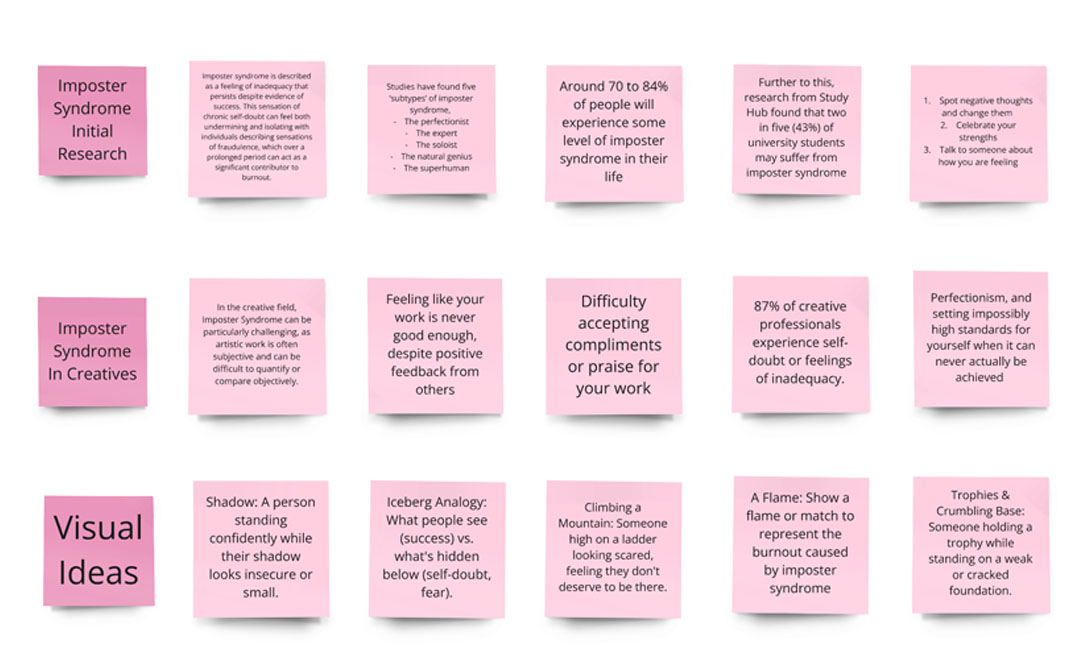
Once we had decided on our subject matter, we came together to do some research on what imposter syndrome is. By doing this we were able to confirm our target audience of ‘Arts University Students’ finding evidence of high levels of people experiencing imposter syndrome within the creative industry. As we all had related to this topic, we felt most connected to drive forward and help combat it using our research within the animation.
Experiments
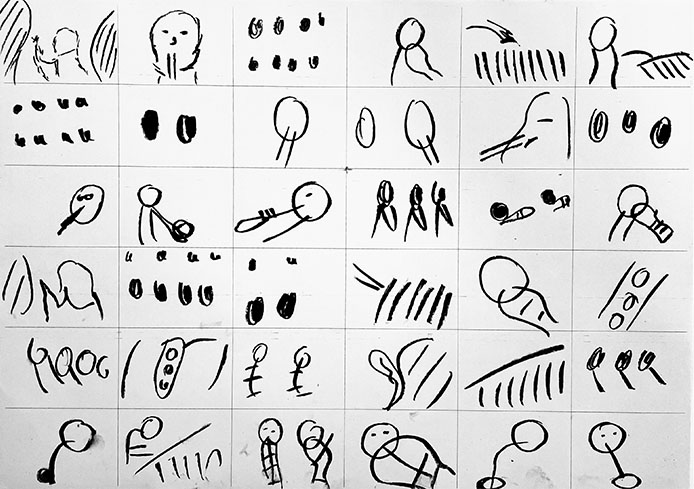
I created a storyboard following a video of orchestra quickly sketching each time the scene changes. This activity taught me how to capture an image for a camera angle change to keep the story interesting and engaging for the audience taking it into consideration when working on the storyboard for the motion project.
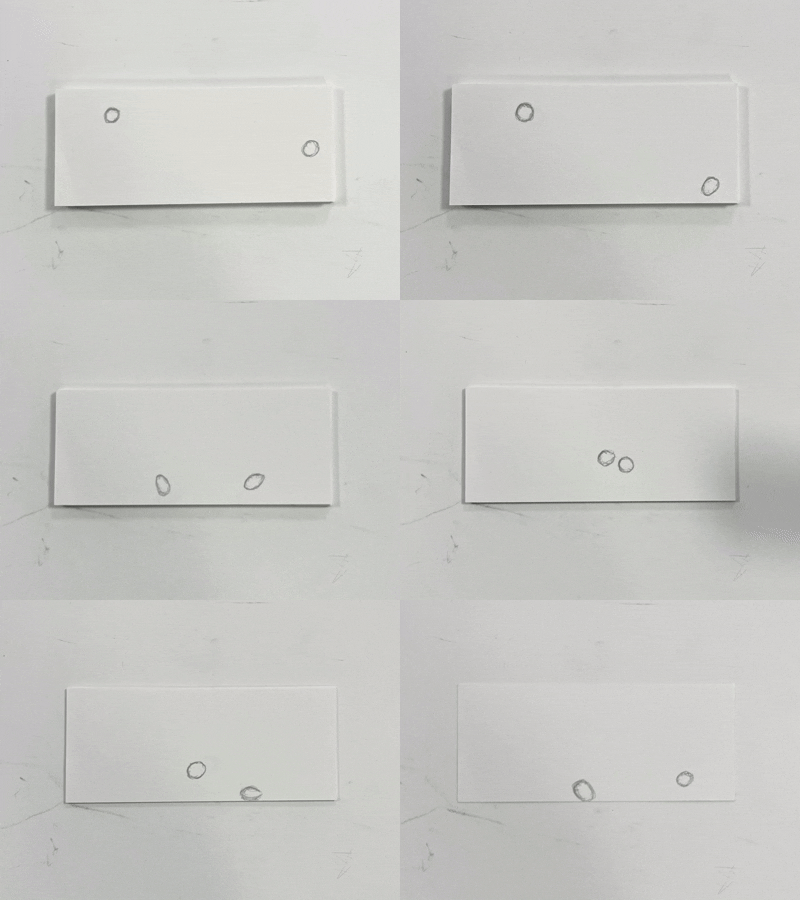
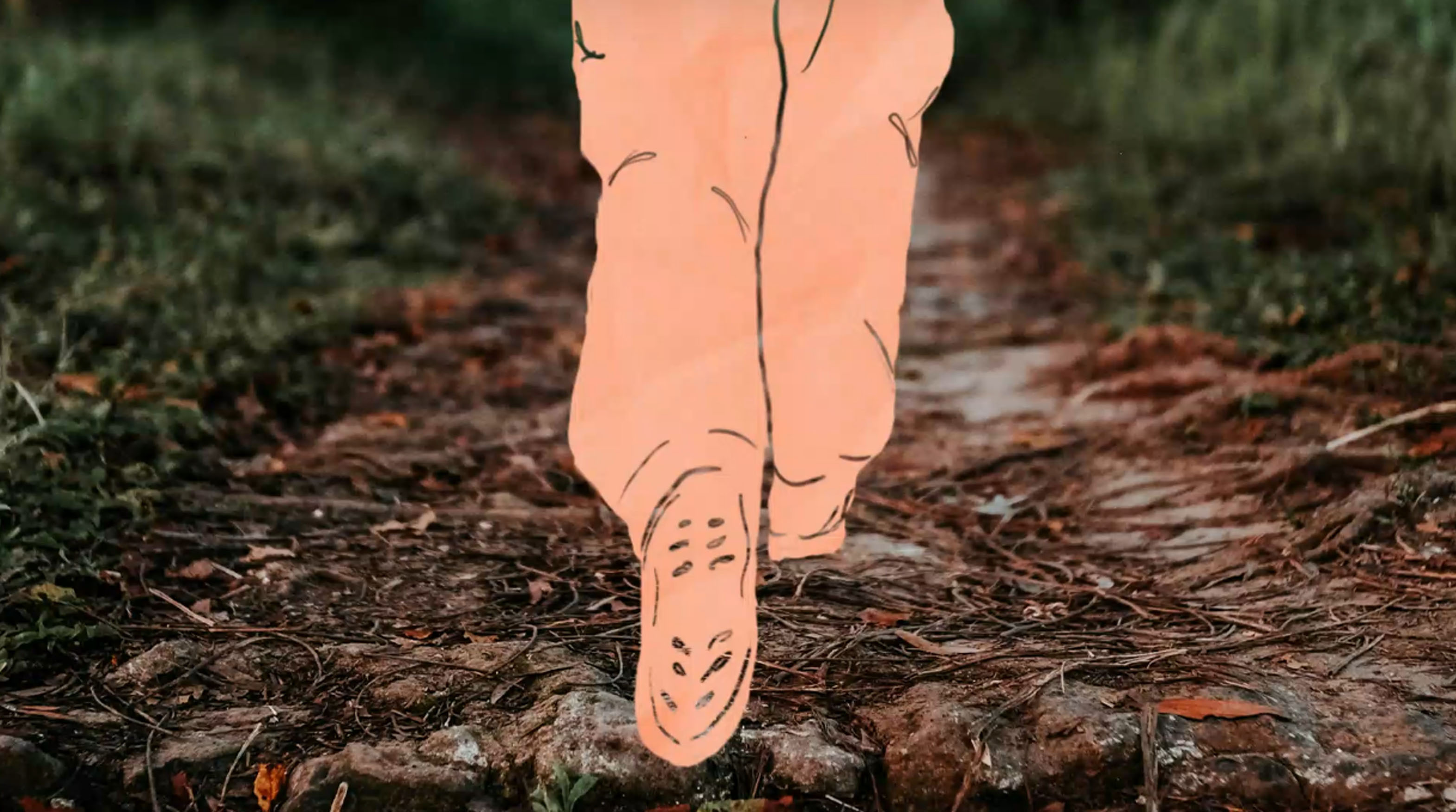
Learning the basics of animation in a workshop I was able to create a simple flipbook of a bouncy ball using the importance of timing and spacing to depict the weight and speed of the object to create a smooth and realistic moving image. These tips were useful when taking forward into the understanding of stop motion especially within the walk sequences.
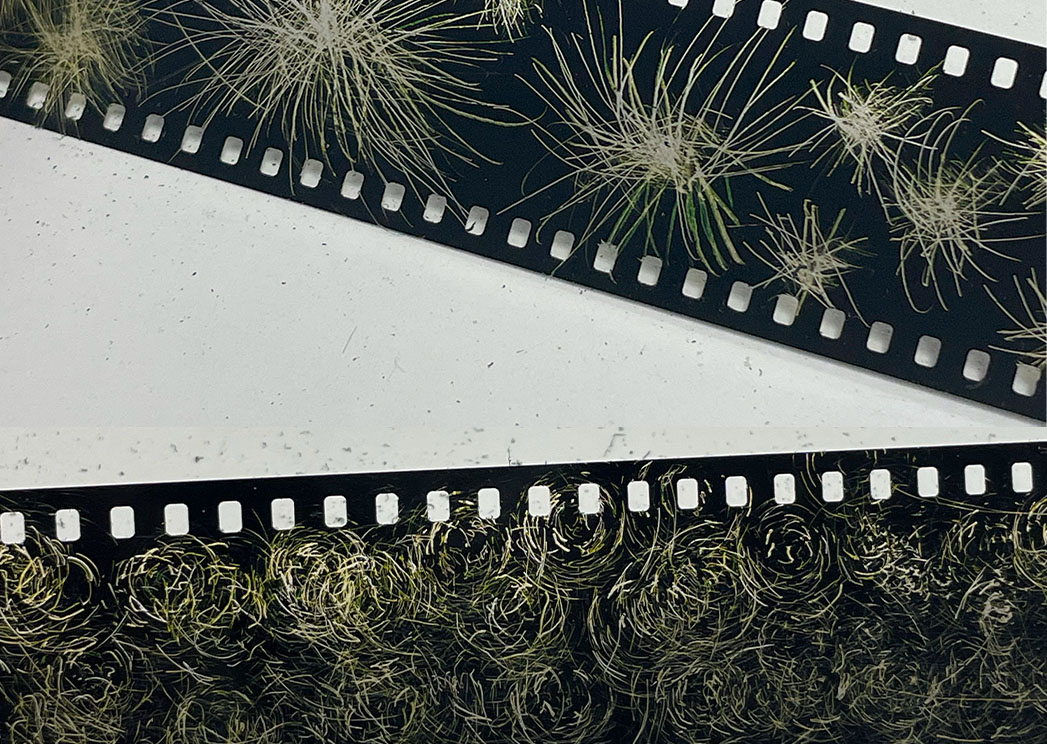
Within this workshop it gave me a deeper understanding of the concept of film and motion, when seeing the final outcome projected in the lecture theatre it was interesting to the collection of still images come to life using pace and rhythm which I think in tern confirmed my drive for watching to create a stop motion style animation.
Script Development
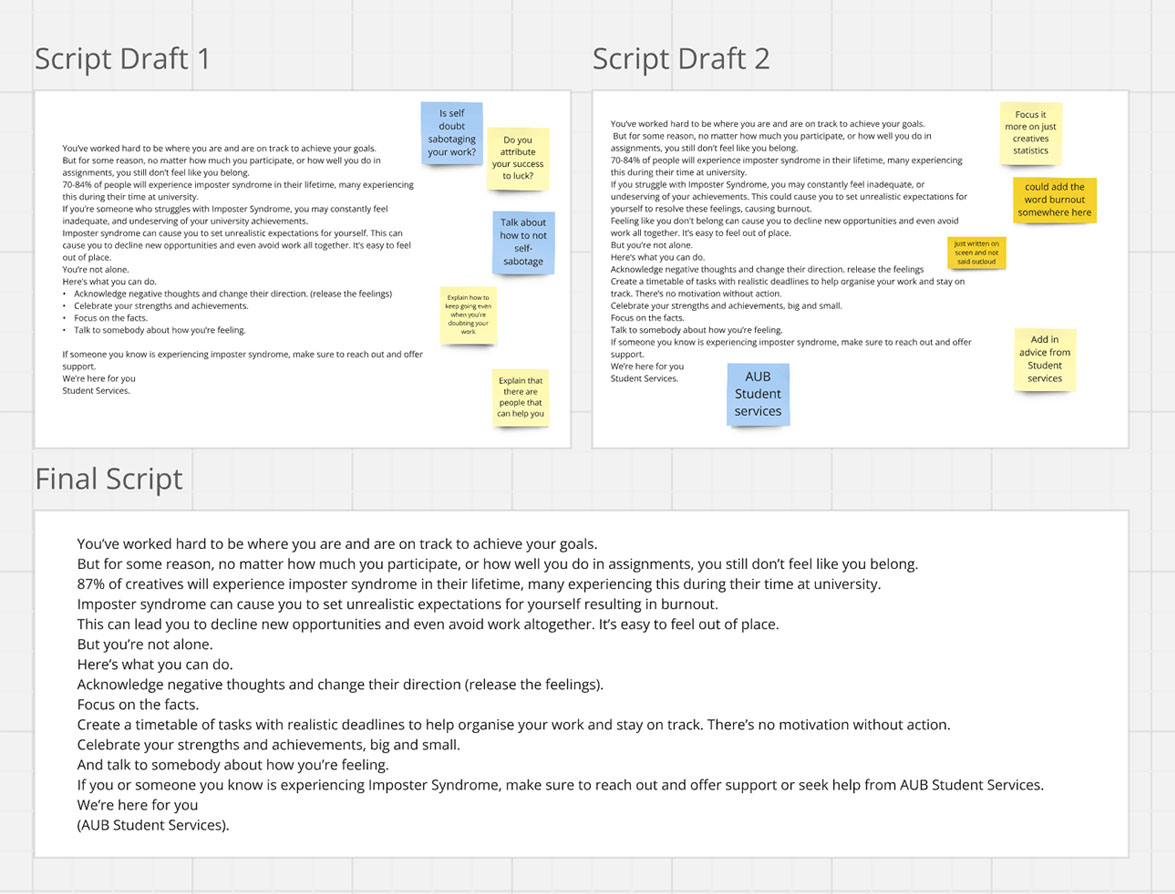
We started the project with basing our visual around our script, taking inspiration from university articles I found targeting students in overcoming imposter syndrome we were able to make the script feel relatable, factual, and helpful having our call to action at the end directing students to additional support from student services. As we went through the project developing it based on feedback making the script shorter giving to viewer time to digest what they have seen/heard.
StoryBoard
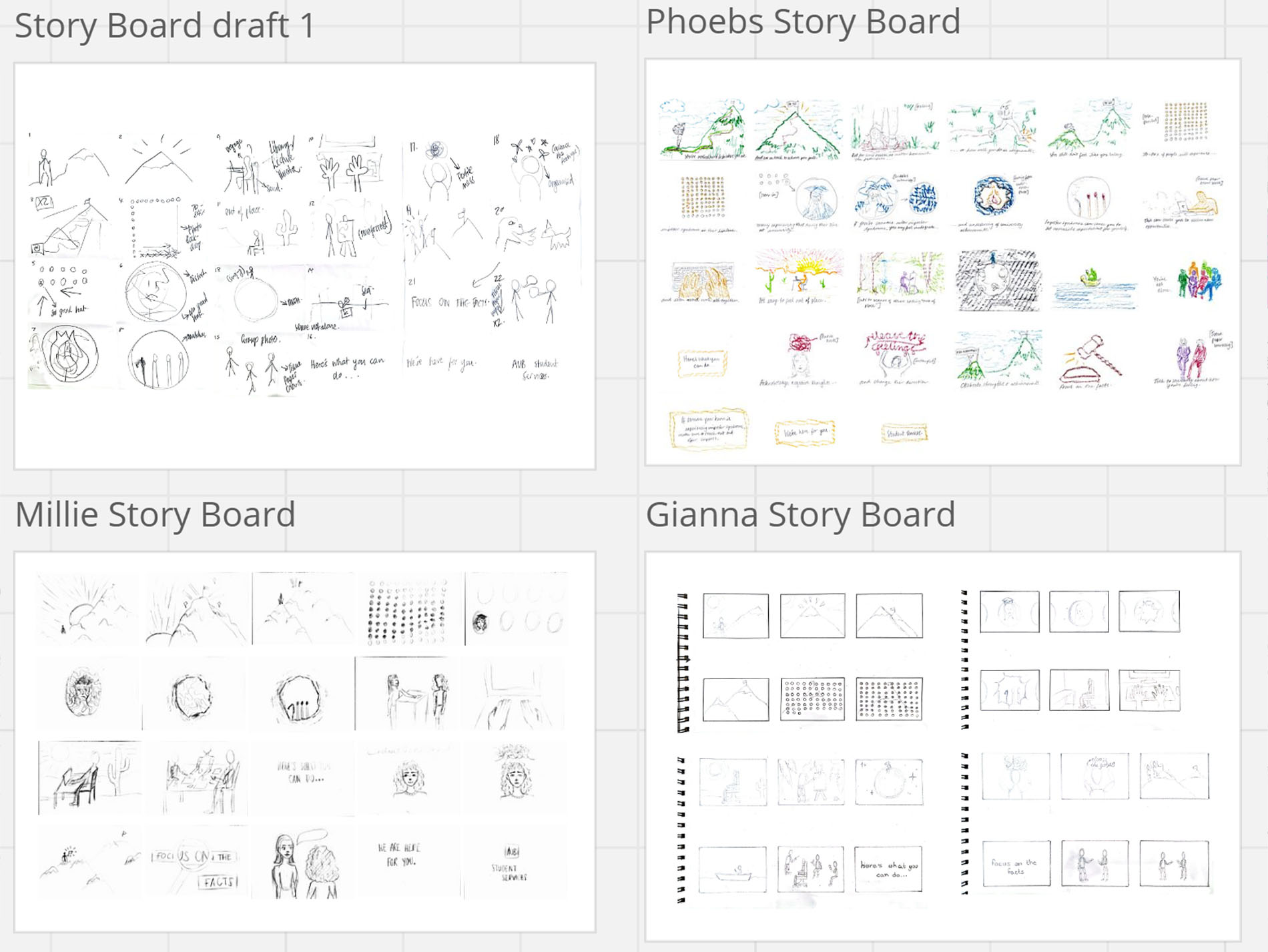
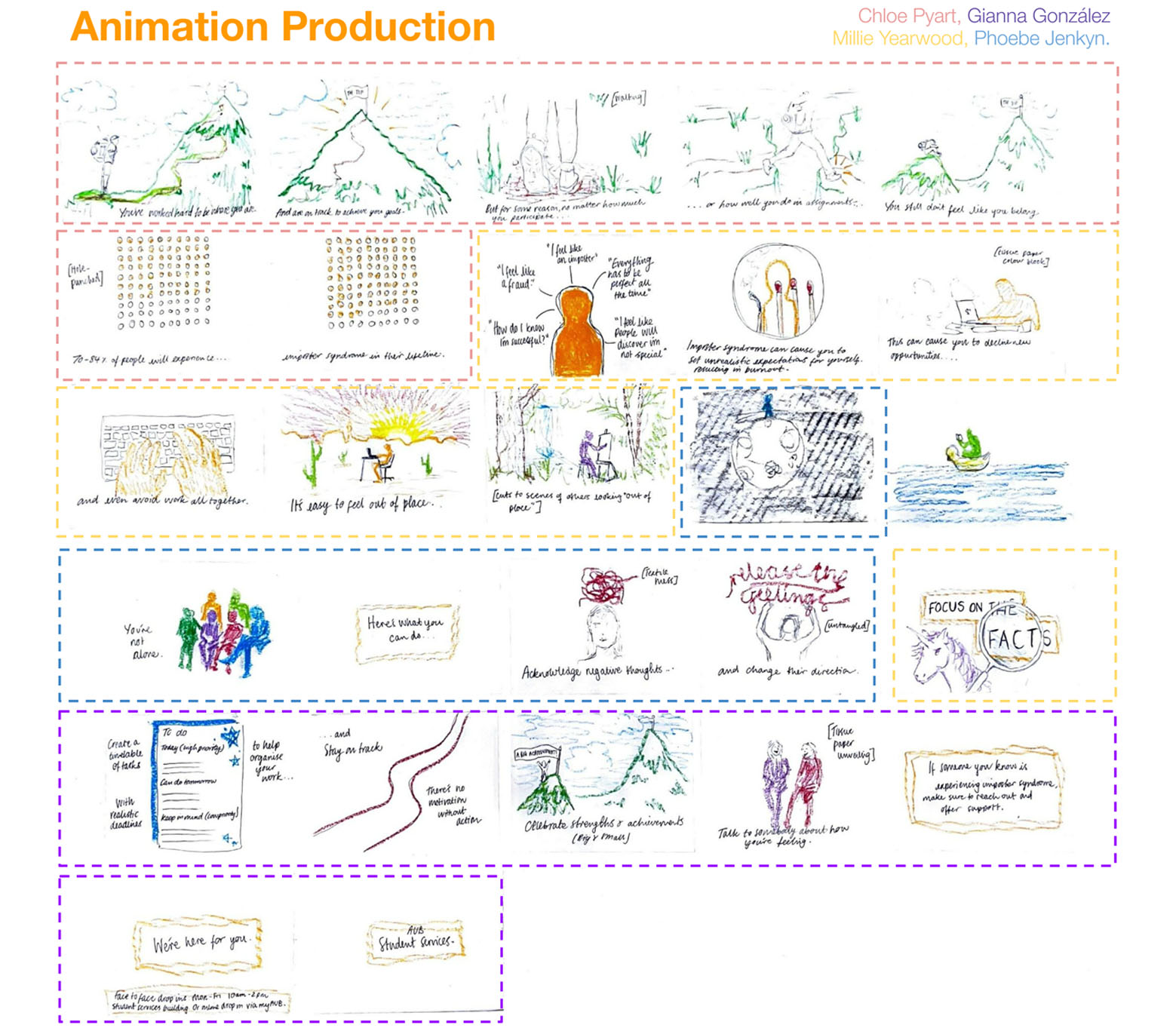
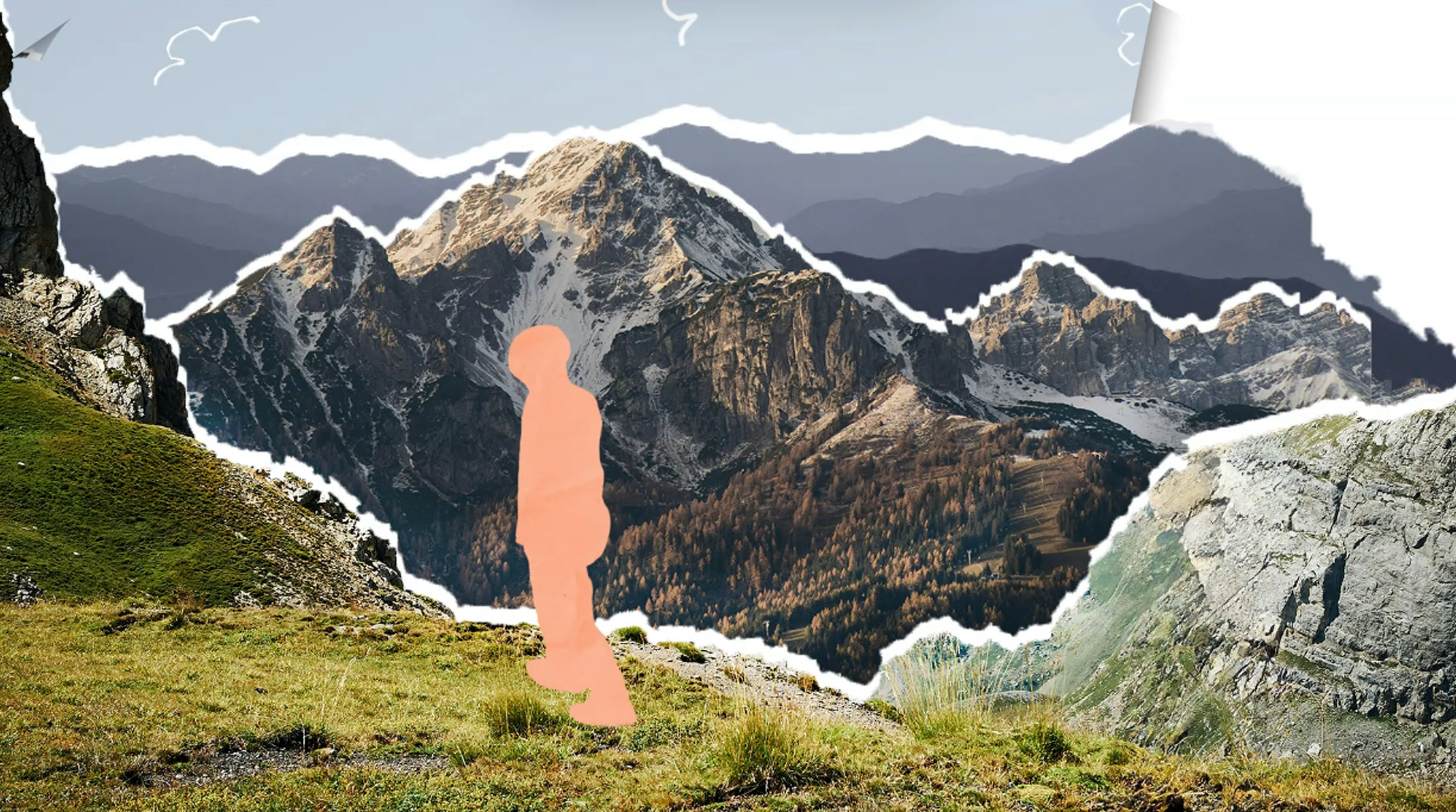
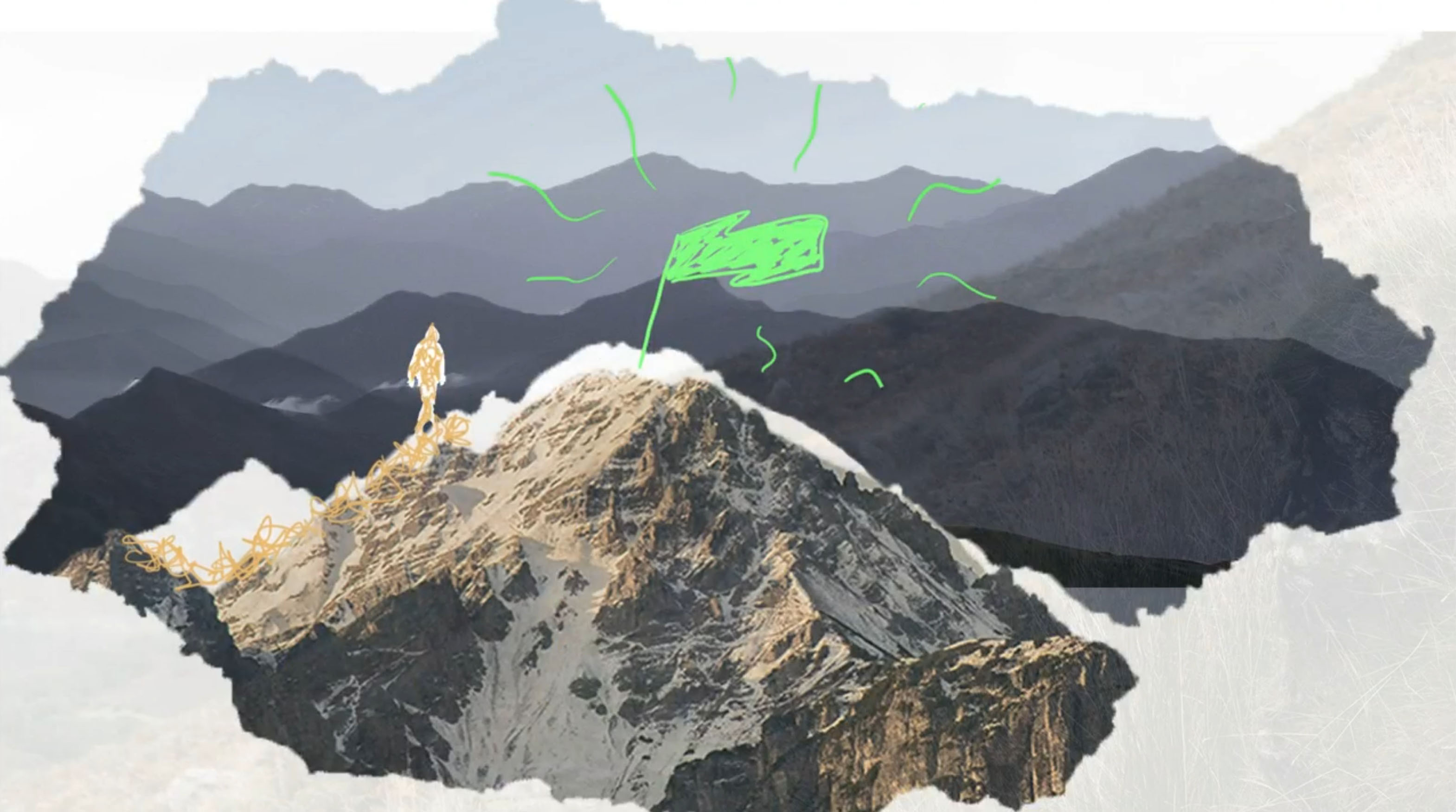
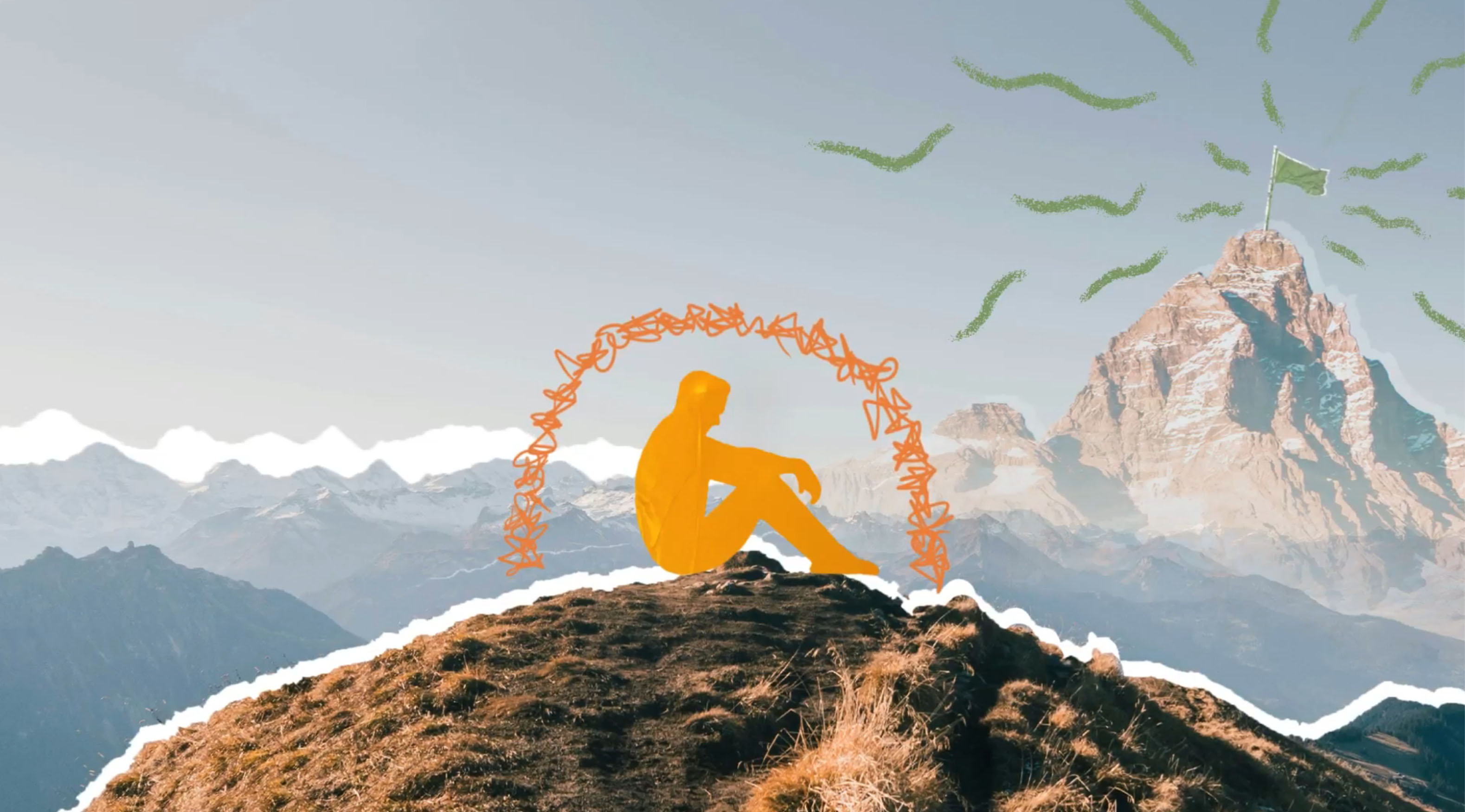
Once we had established our initial script, we worked together throwing around visual ques and ideas using metaphorical visual identity’s to show a journey of someone experiencing imposter syndrome and the feeling that come from this. After the rough initial one was made, we all went away and adapted it adding our own unique elements to the pitch.
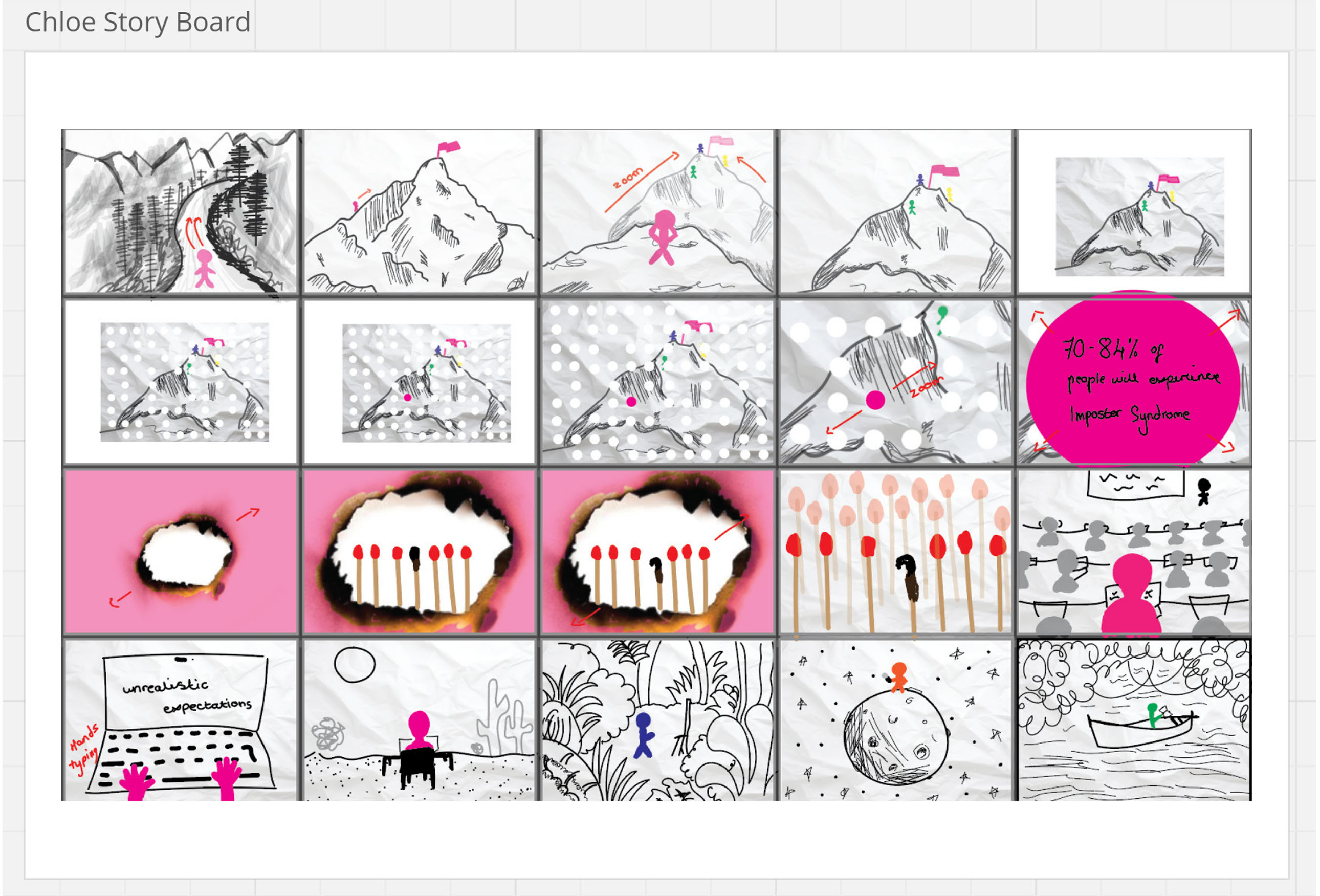
Animatic
Visuals
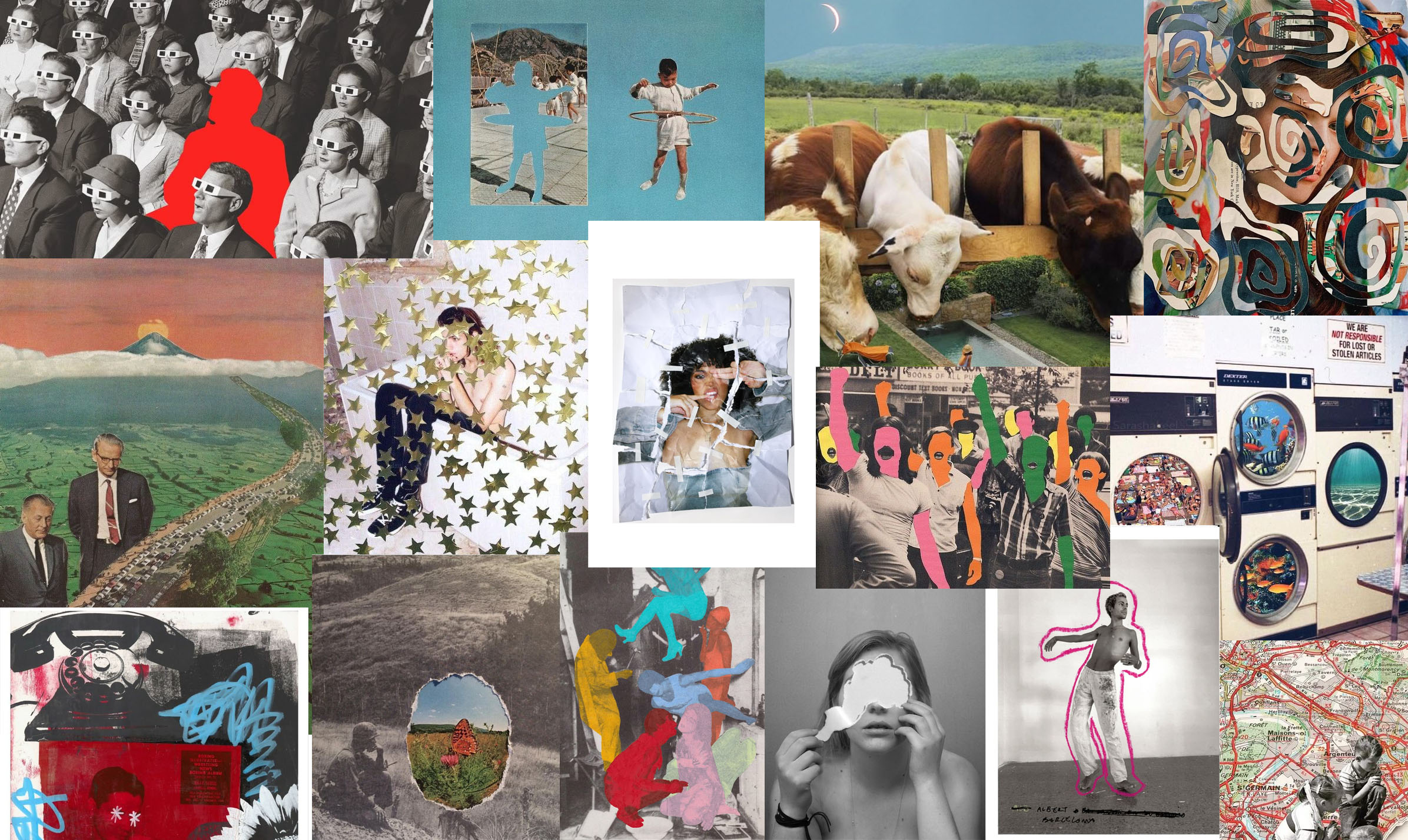
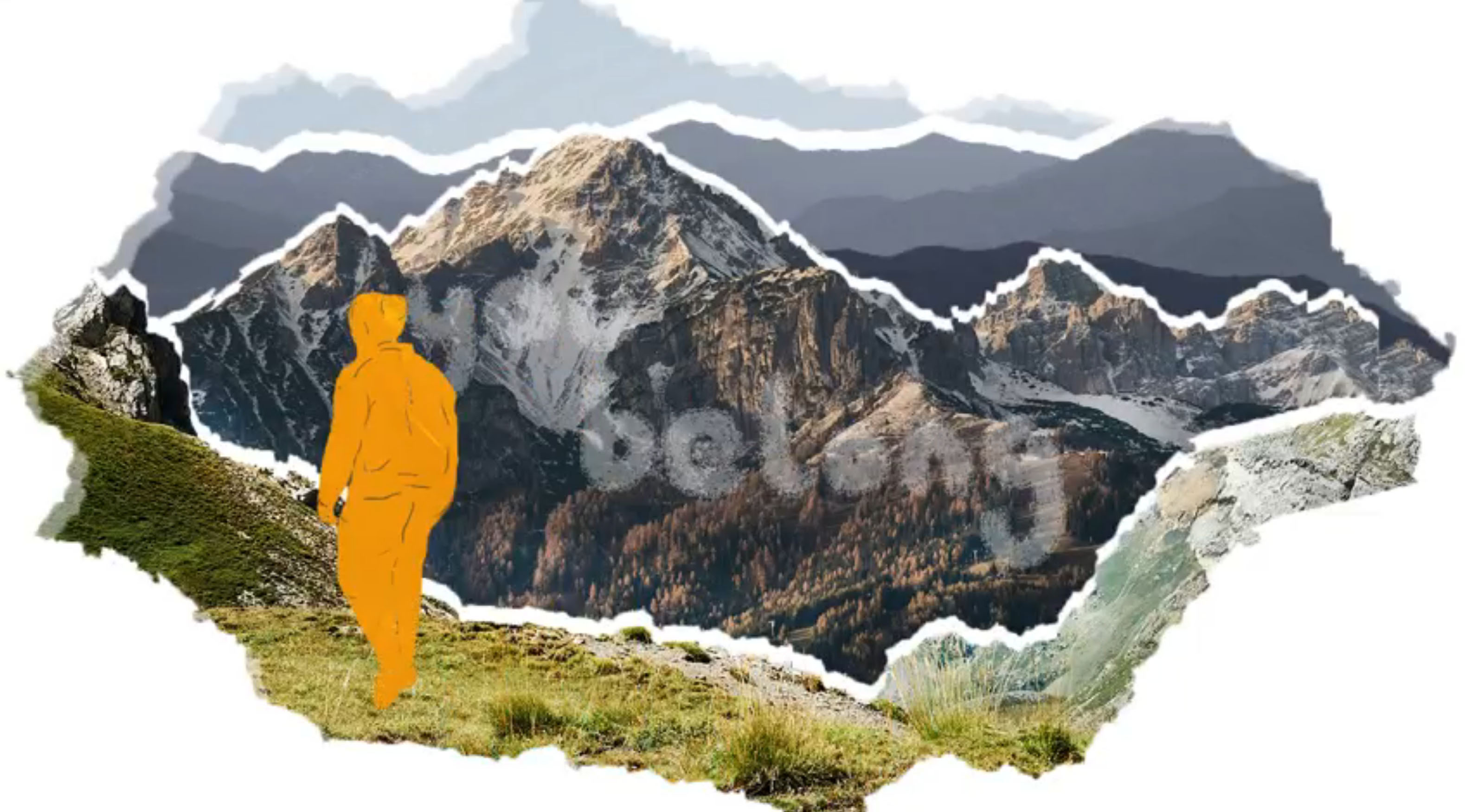
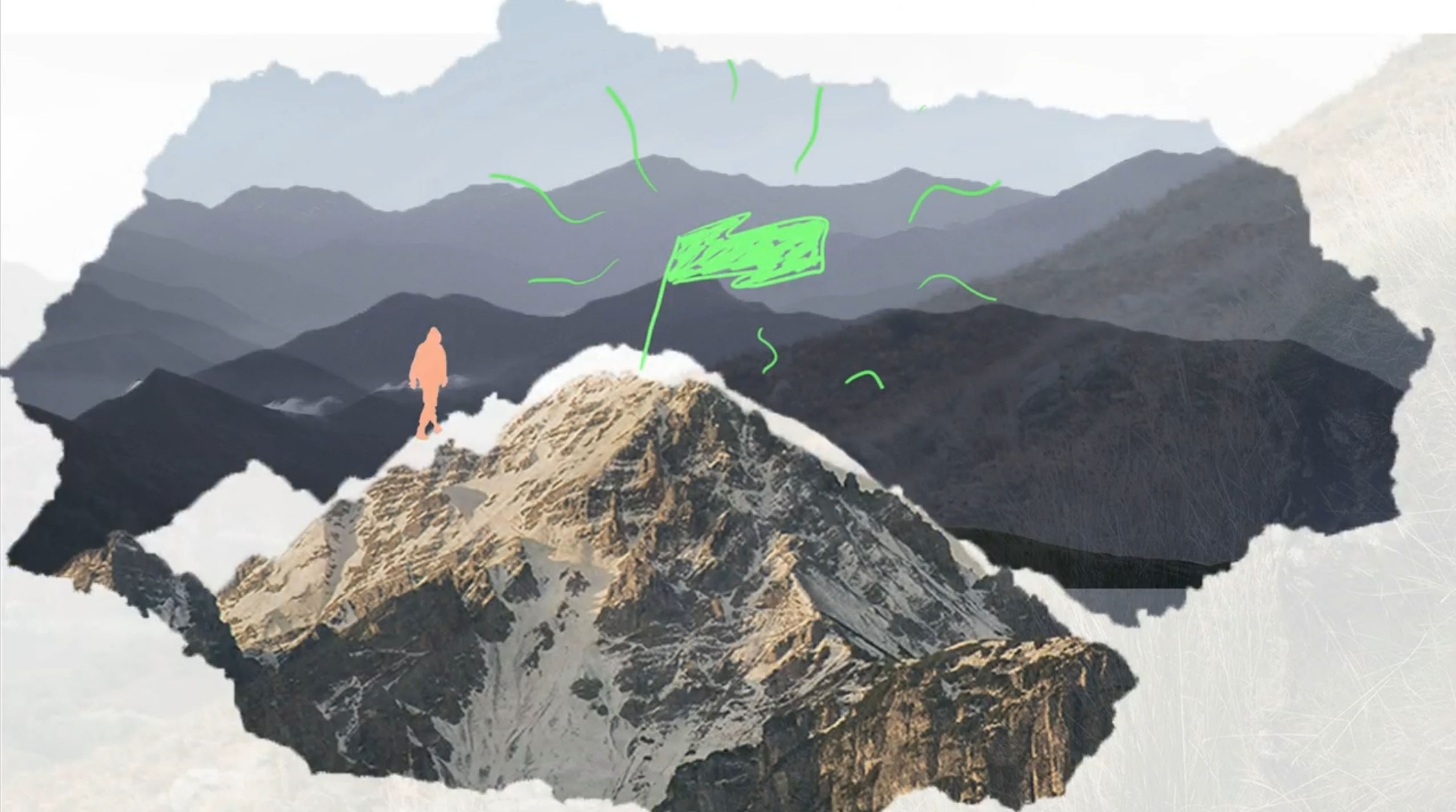
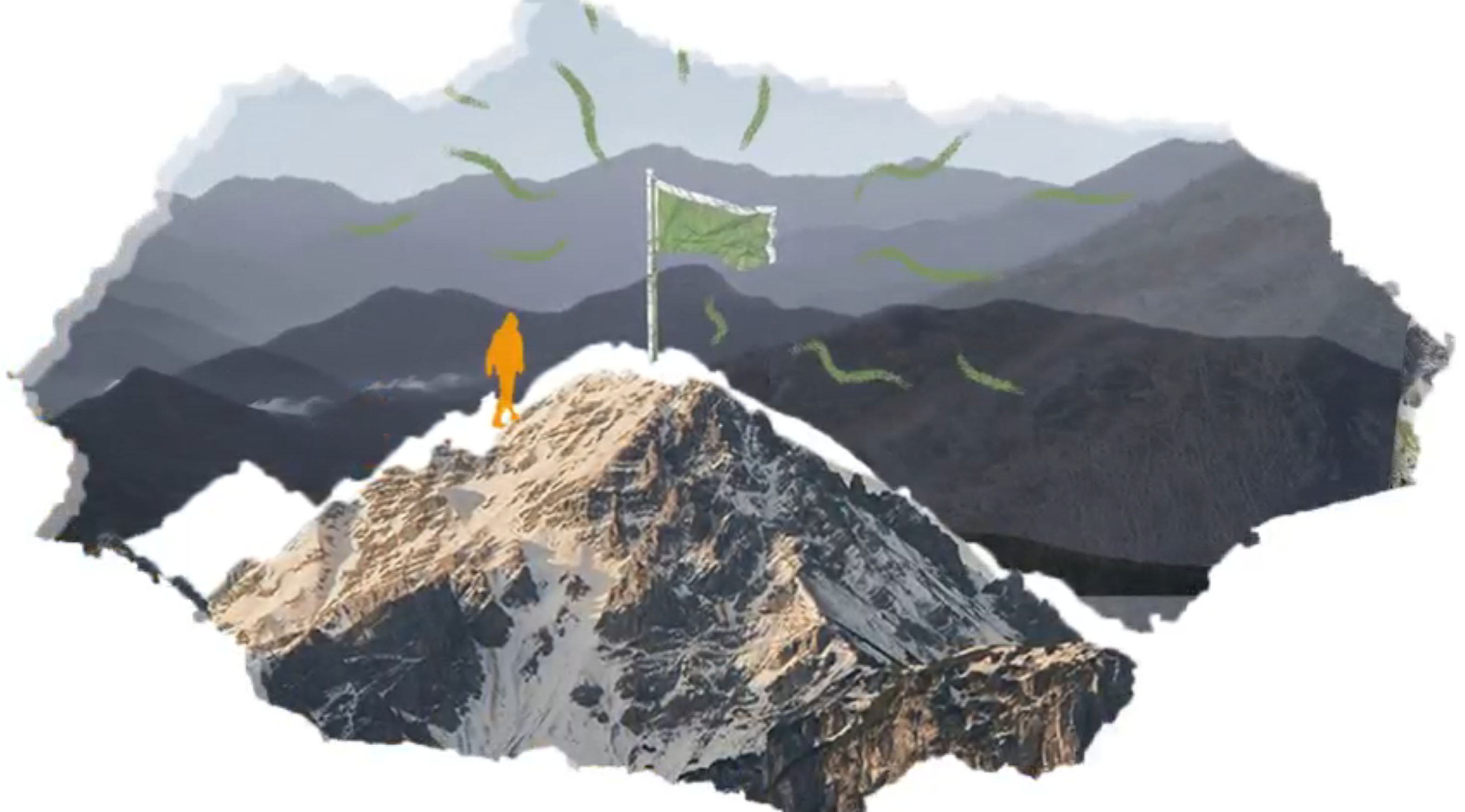
As we are targeting our animation towards people in the creative industry we decided to use a college/scrapbook style of motion to appeal to a wider creative audience combining digital and physical.
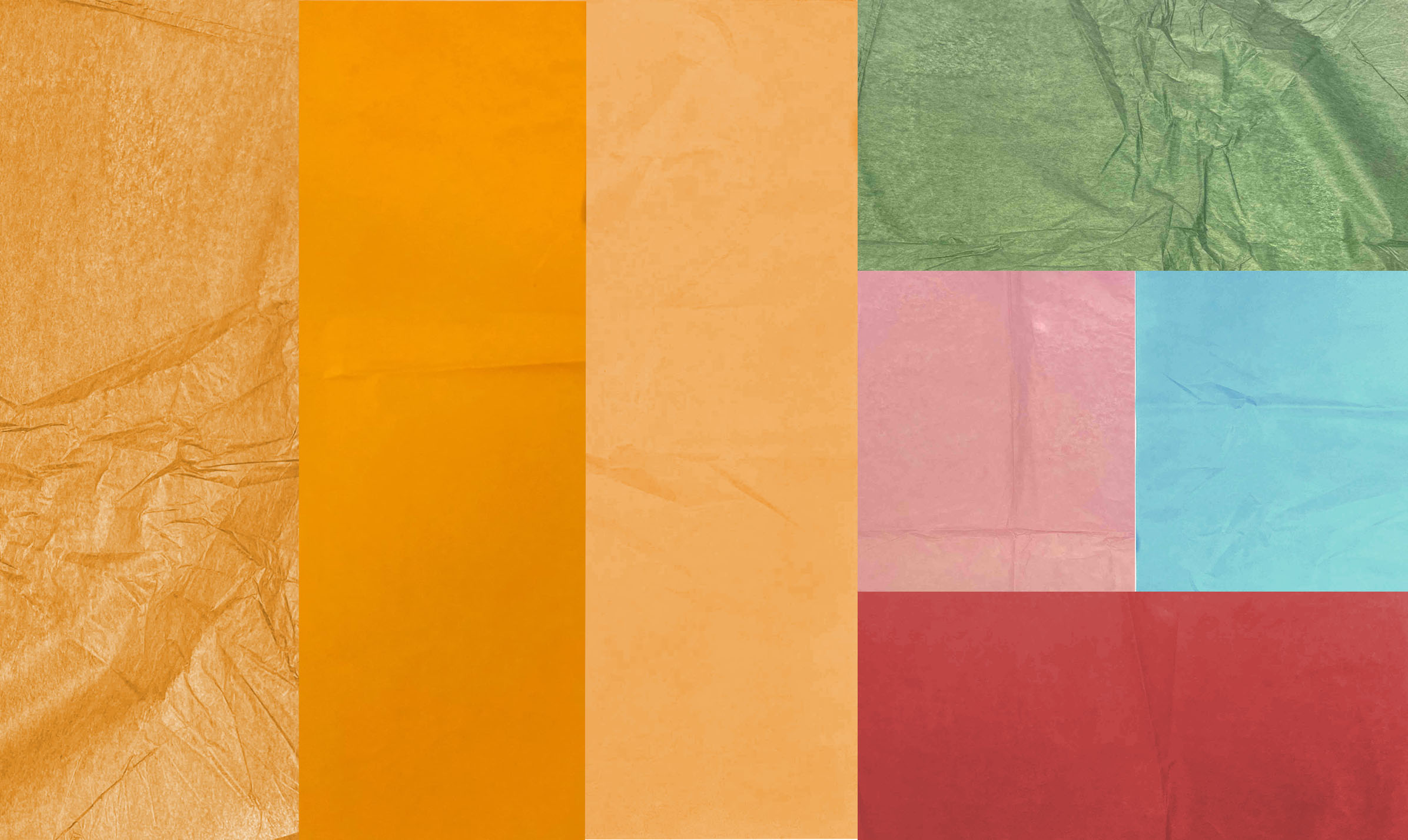
For our colour ways because we were doing it collage style we didn’t mind it being mismatch, but when it came to representing a character with imposter syndrome we decided to follow with the colour orange. We found it encourages creative thinking, and problem solving which works well with our message.
Animation Experiment

Never having used Adobe After effects before I knew this was going to be challenging, but after watching many YouTube tutorials and trial and error how I work, I was able to create my first animated experiment sequence for one the scenes. Although it was difficult navigating a new software, I found the outcome to feel rewarding.
Workload
Voiceover
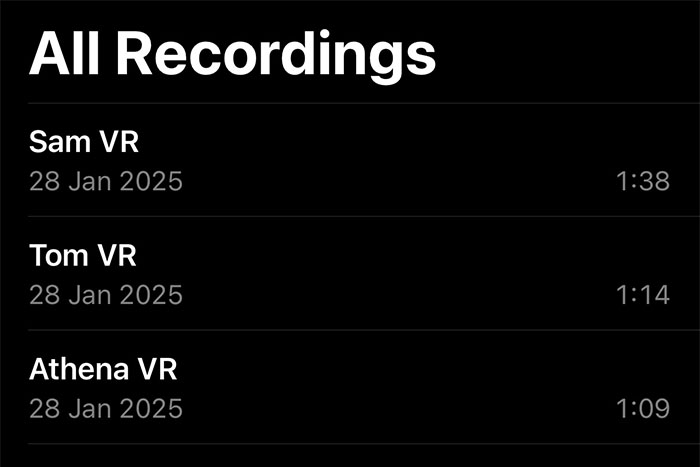
Initially Gianna was our voice over to get us a feel for the pace for the animatic, and for the final thing I gathered a variety of different people doing the voice over, trailing different genders, and accents we decided to keep it as a female as it feels warmer and statistics have proven that imposter syndrome can impact more women then men and the creative industry is typically more female driven.
Development




Evaluation
Before this project, my experience with After Effects was limited to workshop tutorials throughout university, so the idea of creating an animation from scratch felt quite daunting. However, this project provided the push I needed to develop a new skill within motion design. I found that receiving regular feedback after each tutorial helped me refine my technique and gain confidence in bringing static images to life.
As a team, we played to each other’s strengths while also learning from one another, offering fresh perspectives and generating new ideas that developed the project. With four team members, we had to carefully balance the workload while simultaneously learning the applications of After Effects, which presented its challenges as well as learning experiences.
The use of collage-style animation was a creative choice that added depth to our storytelling, reinforcing the theme of imposter syndrome in creatives. Although we worked efficiently within the given timeframe, with more time, I would have liked to improve my application of the walk cycle and transitions, which I believe would have elevated the overall animation and made it even more fluid and engaging.
While collage-style animation is not my strongest area, I thoroughly enjoyed the overall experience of learning motion design. As graphic design continues to evolve toward more motion-based content, I am keen to further develop my skills in animation integrating them into future projects.
Bibliography
Atwell, N. (2025). Colors That Represent Mental Illness? Breaking The Stigma | WordSCR [online]. Available from: https://wordscr.com/colors-that-represent-mental-illness/ [Accessed 12 March 2025].
Clementinedraws.comAvailable from: https://www.clementinedraws.com/post/imposter-syndrome (2023). The Imposter Syndrome in the Creative Field: What it is and How to Deal with it [online]. [Accessed 12 March 2025].
Home, J. (2022). Imposter syndrome [online]. Available from: https://www.bma.org.uk/advice-and-support/your-wellbeing/insight-and-advice/first-times-in-medicine/imposter-syndrome [Accessed 12 March 2025].
Law, U. of (2022). Nearly half of students experience imposter syndrome – experts reveal how to tackle it [online]. Available from: https://www.law.ac.uk/about/press-releases/tackling-imposter-syndrome/ [Accessed 12 March 2025].
Manchester Metropolitan UniversityAvailable from: https://www.mmu.ac.uk/news-and-events/news/story/what-does-imposter-syndrome-look-university (2024). What does imposter syndrome look like at university? [online]. [Accessed 12 March 2025].
Nuffieldhealth.comAvailable from: https://www.nuffieldhealth.com/article/imposter-syndrome-signs-symptoms-treatments (2021). Imposter syndrome | The signs, symptoms, and treatments [online]. [Accessed 12 March 2025].
richlowejr (2024). Imposter Syndrome for Creatives: When Is It Too Much? [online]. Available from: https://thewritingking.com/imposter-sydrome-for-creatives/ [Accessed 12 March 2025].
team, N. editorial (2024). Orange Color Psychology: Unveiling the Vibrant Impact on Emotions and Behavior [online]. Available from: https://neurolaunch.com/orange-color-psychology/ [Accessed 12 March 2025].